




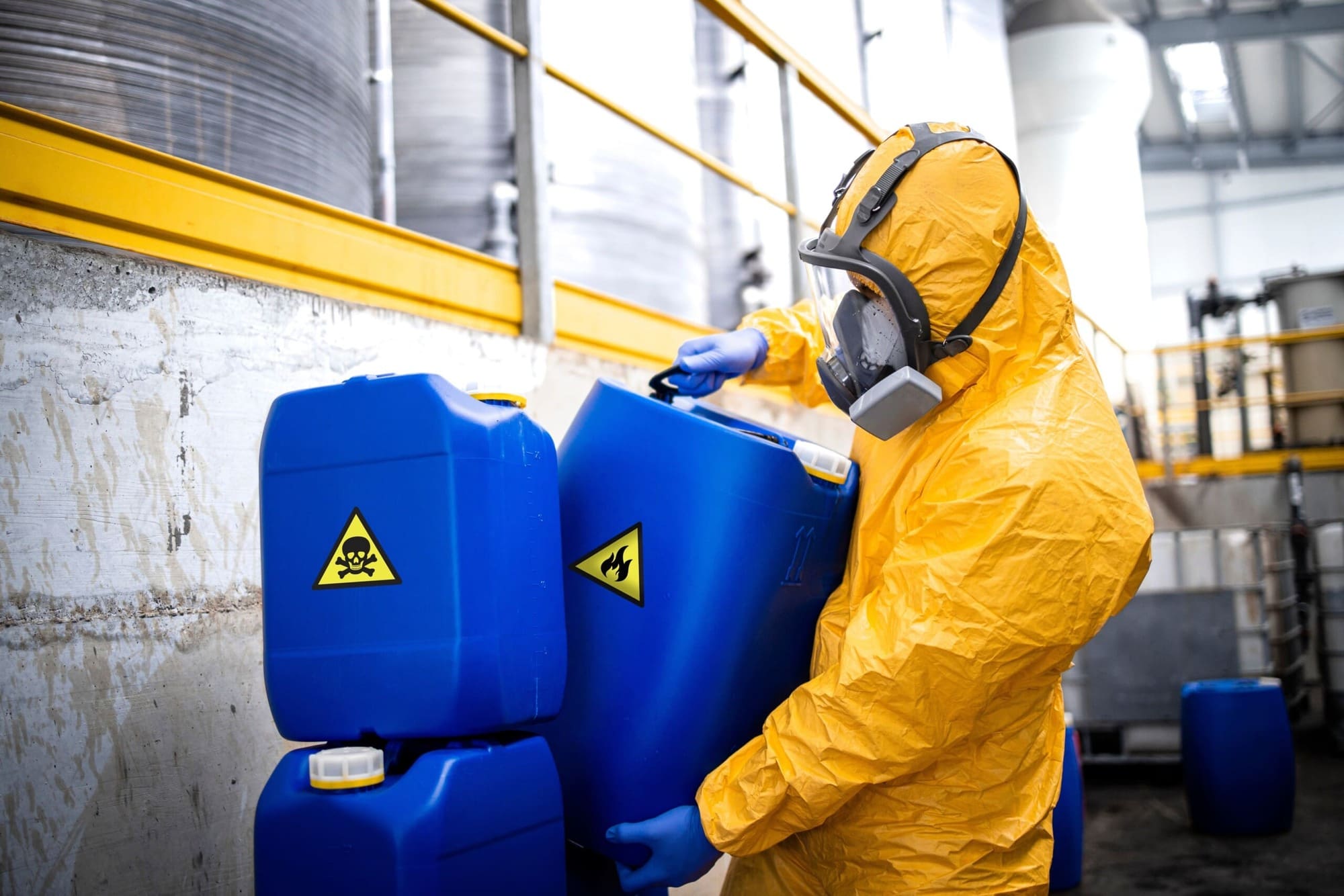
Chemical storage laws reach far beyond putting warning stickers on drums. U.S. facilities may face OSHA hazard-communication rules, process-safety requirements, EPA emergency-planning obligations, fire-code controls, and environmental release-reporting duties.
The applicable rules depend on the chemical, quantity, container, process, facility location, and potential worker or community exposure.
Labels and Safety Data Sheets Form the Baseline
OSHA’s Hazard Communication Standard requires covered employers to maintain a written hazard communication program and communicate chemical hazards through labeling, safety data sheets, and employee information and training.
Employers generally must keep required SDS information readily accessible to employees during their work shifts. Incoming labels also cannot simply be removed or defaced without meeting the standard’s workplace-labeling requirements.
Operational teams reading industrial news and commentary should rely on the SDS and applicable regulations—not general web descriptions—to determine a chemical’s hazards and protective measures.
Segregation Depends on Chemical Compatibility
There is no single universal spacing rule that safely covers every industrial chemical. Storage decisions may depend on flammability, oxidation potential, water reactivity, corrosivity, pressure, temperature, and incompatible materials.
The chemical’s SDS, applicable OSHA requirements, environmental rules, and fire codes should be reviewed together. Facilities following manufacturing developments should avoid copying another site’s chemical-storage layout without confirming that the substances, quantities, building design, and governing rules are comparable.
Why Inventory Control Matters
Accurate inventory is also a legal issue. If purchasing records differ from what is physically stored, a facility can miss reporting triggers or build emergency plans around outdated assumptions.
Emergency Planning Can Trigger Separate Duties
EPCRA requires covered facilities to provide information about certain hazardous chemicals to state or tribal emergency-response commissions, local or tribal emergency-planning committees, and fire departments. EPA also describes annual hazardous chemical inventory reporting requirements for facilities meeting the applicable criteria.
| Compliance Area | Typical Requirement | Why It Matters |
|---|---|---|
| Hazard communication | Labels and SDS access | Worker awareness |
| Segregation | Compatibility controls | Prevent reactions |
| Inventory reporting | Chemical quantity records | Community planning |
| Emergency response | Written procedures | Control releases |
Broader regional safety coverage can support general awareness, but reporting decisions should be based on the actual chemical inventory and governing agency requirements.
Facilities with specified extremely hazardous substances can also face EPCRA emergency-planning duties, while certain highly hazardous processes may fall under OSHA’s Process Safety Management standard.
Spill Duties Depend on What Was Released
A spill does not have one universal reporting rule. Notification requirements can depend on the substance, quantity, location, environmental medium, permit conditions, and applicable federal or state program.
Emergency procedures should therefore identify who evaluates a release, who contacts emergency responders, and who determines whether regulatory notification is required.
Where Chemical Storage Programs Fail
A common failure is treating the SDS binder as the entire compliance program. Labels and SDSs are essential, but they do not replace compatible storage, ventilation, containment, training, inspection, emergency planning, and required regulatory reporting.
Another weak point is temporary storage. Containers placed in production areas during maintenance or batching still need appropriate controls.
When Regulatory or Legal Help Is Appropriate
Get qualified assistance when introducing an unfamiliar hazardous chemical, substantially increasing stored quantities, changing tank or warehouse configurations, or determining whether emergency-planning or release-reporting thresholds apply.
Prompt advice is also sensible after a significant spill, fire, employee exposure, regulator inquiry, or discovery that required inventory reports may have been inaccurate or missed.
Frequently Asked Questions
Must every workplace chemical have an SDS?
OSHA requires SDSs for hazardous chemicals covered by the Hazard Communication Standard, subject to the standard’s scope, definitions, and specific exceptions.
Are incompatible chemicals legally required to be separated?
Applicable storage requirements vary by substance and regulation. Compatibility information, SDS instructions, OSHA standards, environmental requirements, and fire codes may all affect proper segregation.
Does every chemical spill have to be reported?
No single rule covers every spill. Reporting depends on the material, quantity, circumstances, location, permits, and federal, state, or local requirements.
Make Chemical Control a Living System
Chemical compliance should change whenever inventory, processes, or storage arrangements change. Keep labels readable, SDSs accessible, inventories accurate, incompatibilities controlled, and emergency procedures tied to the chemicals actually present.
That approach makes the storage area safer while reducing the chance that a regulatory obligation is discovered only after an incident.
This article provides general legal information and is not a substitute for advice from a qualified attorney, safety professional, or environmental professional.